

Wood Types & Local Materials
Wood is more than just a material;
each species tells its own story through its grain, color, and density. In my workshop, I primarily use local woods from neighboring gardens – from the characterful apple tree to the elegant walnut. Discover the unique properties of the woods that give my handcrafted pieces their soul.
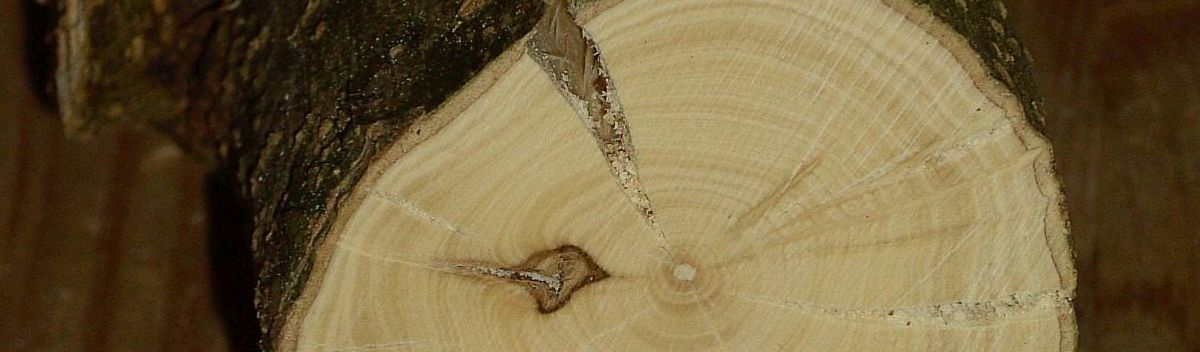
A distinction is primarily made between the Common Hawthorn (Crataegus monogyna) and the Midland Hawthorn (Crataegus laevigata). Since the timbers of both species are virtually indistinguishable in their technological properties, they are treated as one in the timber trade and woodworking crafts.
Hawthorn provides an exceptionally **hard, tough, and elastic** wood featuring prominent medullary spots. Due to its often irregular growth and small trunk diameters, it is rarely used in industrial applications today. However, it remains highly valued in traditional **archery** and for premium tool handles.
- Details
-
Also available:

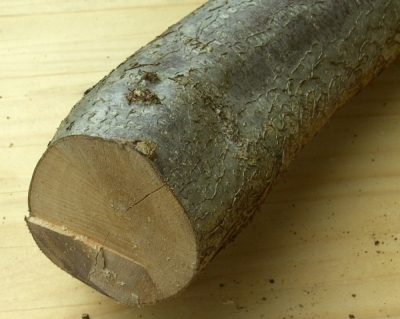
The Hazel (Corylus avellana) is a moderately hard and tough wood. It possesses high elasticity, which makes it a popular choice for bow making. There is no distinction between heartwood and sapwood, but the wood is excellent for carving.
Due to its tough and elastic properties, hazel is also used to create outstanding handles for tools and weapons. Thin switches (rods) can even be used for weaving baskets.
Historically, these flexible rods were used for wattle fences, bird snares, beating sticks, and basket handles, while stronger branches were crafted into walking sticks and crossbow bows. The wood, which is not particularly durable, was used for turning and carpentry. It also served as fining chips in beer and vinegar production, as well as for the manufacture of black gunpowder and soft drawing charcoal. In old folklore, a hazel branch was considered a protective charm against magic and misfortune.
- Details
-
Also available:
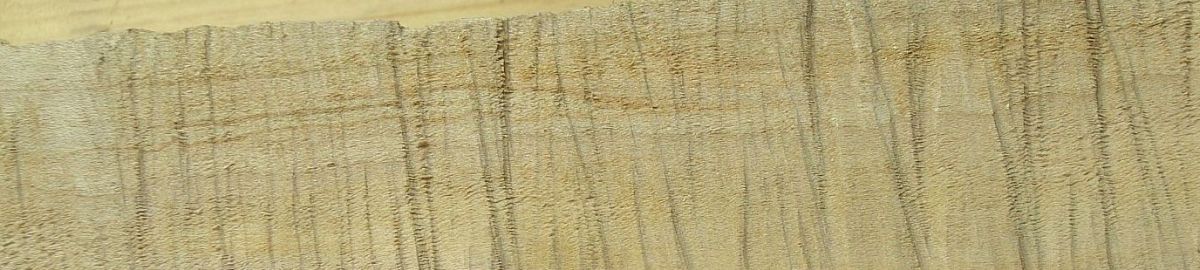
The Hornbeam (Carpinus betulus) is also commonly known as European Hornbeam. Its German name "Hainbuche" derives from the Old High German "Haganbouche," which points to its tolerance for heavy pruning (hedging). While its second name "Buche" (Beech) refers to its visual similarity to the Copper Beech, the Hornbeam is not closely related to the Beech family.
The wood of the hornbeam is whitish, which also led to the alternative name "White Beech." There are no color differences between the sapwood and heartwood. The annual rings are very difficult to distinguish, giving the wood a very uniform appearance. Hornbeam is truly one of the hardest native woods. The wood is rather plain and very light, almost white. It is exceptionally hard, heavy, and dense. Furthermore, it is considered tough and elastic. Its breaking strength is even greater than that of oak. However, the wood shrinks considerably and is prone to cracking and warping.
- Details
-
Also available:
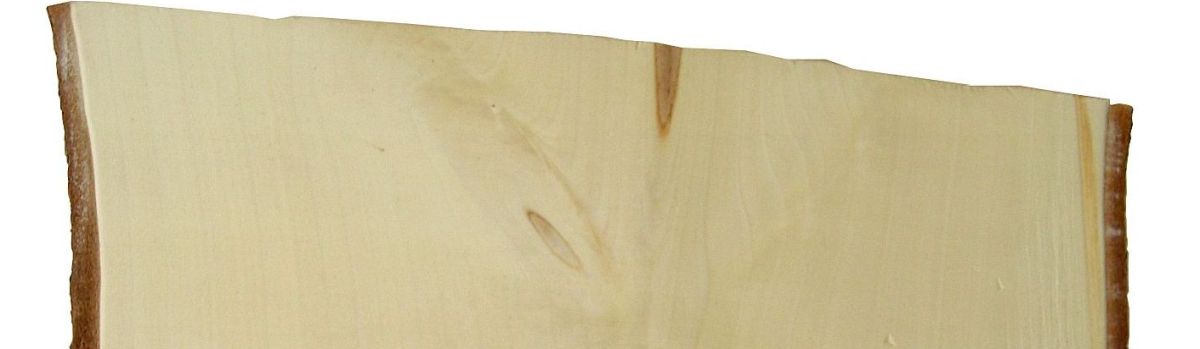
The Horse Chestnut (Aesculus hippocastanum), also commonly known as the European Horse Chestnut, is a fast-growing tree reaching heights of up to 30 meters and an age of 300 to 400 years.
Botanically, the horse chestnut is a **sapwood tree**, meaning there is virtually no color distinction between sapwood and heartwood. The timber features a pale, yellowish-white to light brownish hue. Its texture is very fine and uniform, while the grain in regular trunk wood appears rather plain and subtle.
- Details
-
Also available:
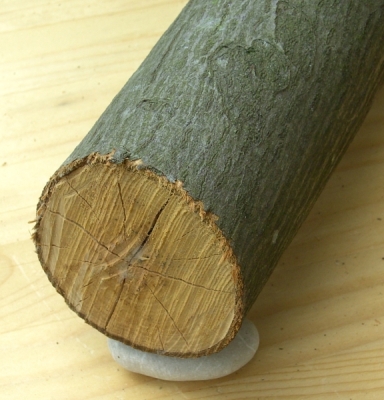
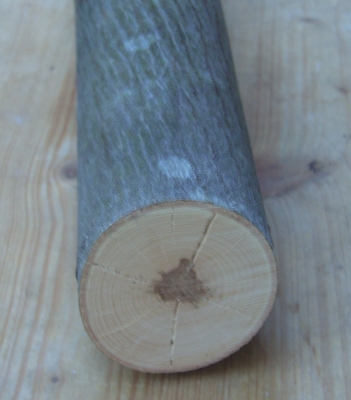
The Juneberry (Amelanchier ovalis), also known as snowy mespilus or serviceberry, is actually a multi-stemmed shrub reaching heights of 1–3 meters.
The leaves and seeds are considered mildly toxic to humans.
The wood is dense, fine-grained, tough, and very difficult to split. Its color is often reddish-brown to grayish. Due to its exceptional toughness, it was traditionally used to manufacture tool handles or walking sticks.
Similar to boxwood, it can be sanded and polished to an excellent finish.
- Details
-
Also available:
American Mahogany (Swietenia macrophylla) is also known as genuine mahogany and is native to Central America and tropical South America.
The tree is initially evergreen, only shedding its leaves later in life. It can reach heights of up to 70m, with trunk diameters of up to 3.5m.
Genuine mahogany is relatively lightweight yet strong and extremely durable. It exhibits minimal warping and shrinkage and has excellent stability. Cracking rarely occurs during the drying process.
Furthermore, it possesses outstanding properties as a tonewood and is frequently used in furniture making (solid wood or veneer) and woodturning.
It is highly resistant to fungi and insects.
- Details
-
Also available:
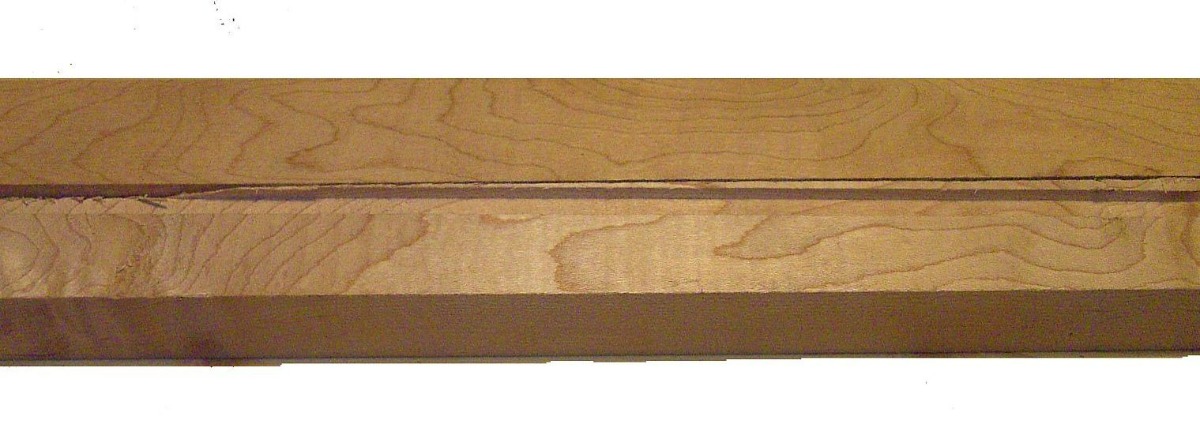
There are many different types of Maple (Acer).
The wood has a fine grain and a very uniform structure. Its color ranges from almost white to a very light brown.
The hardness of the wood varies greatly between the different types. In America, there is even a classification system that distinguishes between “soft maple” and “hard maple” (hard maple).
In Europe, sycamore maple (Acer pseudoplatanus) is mostly used. Its wood is dense and hard and can be worked very well. It is easy to carve and the surfaces can be smoothed to perfection. Sycamore maple is also very popular in musical instrument making because it has very good sound properties.
There are also Norway maple and field maple in Europe. Their wood is usually brownish with a grayish tinge, sometimes even said to have a slight pink color. It is not as decorative as the more commonly used lighter sycamore maple. The two are also much harder.
Sometimes people refer to “Canadian maple.” This usually means sugar maple (Acer saccharum).
Sugar maple grows in North America and Canada. Its wood is dense and hard and belongs to the hard maple category, in this particular case also sugar maple.
The late wood is reddish in color. The core is brown with a greenish tinge in places. The grain is straight and the wood has a simple structure; it is dense and fine-pored.
- Details
-
Also available:
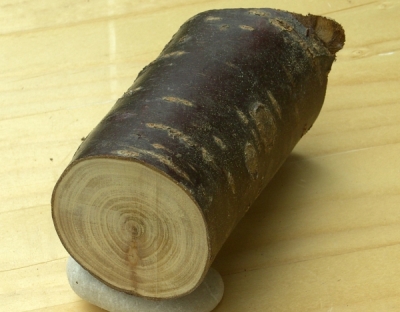
The wood of the Mirabelle (Prunus domestica subsp. syriaca), also known as the yellow plum, is a subspecies of the common plum (Prunus domestica). It is an aesthetically outstanding precious wood, typically featuring very fine, closely spaced annual rings, which indicates slow growth.
The sapwood is relatively light and narrow, while the heartwood takes on a significantly darker, often reddish-violet to brown coloration. However, the demarcation between sapwood and heartwood in the mirabelle is not always as sharply defined as in the common plum.
In its mechanical properties, the wood is very similar to that of the plum: it is **hard, very dense, and heavy**. This density allows for an excellent surface finish but requires sharp tools for processing. Due to the fine fiber structure, even the smallest details can be precisely crafted without the wood tearing out.
- Details
-
Also available:
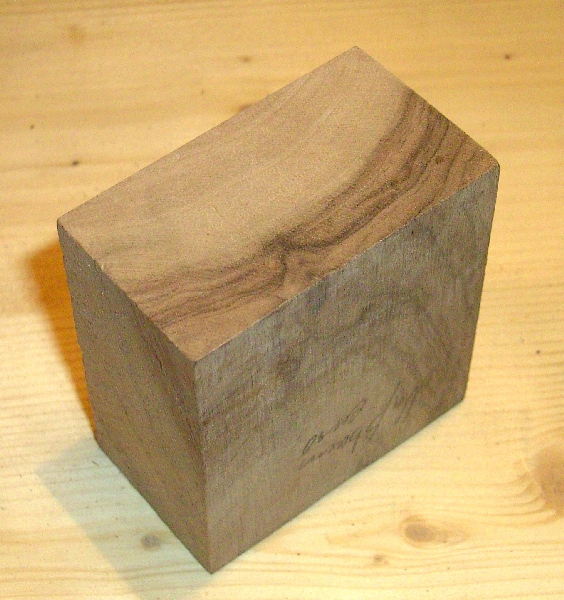
The English Walnut (Juglans regia), from the walnut family (Juglandaceae), is a classic heartwood tree. Its timber is considered one of the most valuable native precious woods.
Sapwood and heartwood differ significantly: the narrow sapwood is light-colored, ranging from grey-white to reddish-white. The coloration of the heartwood varies greatly depending on location and age—the spectrum ranges from matte grey and light brown to a deep dark brown, often permeated with dark streaks. The prominent annual rings give the wood a vivid, decorative figure.
Particularly sought after are the **Burl Clusters (Maserknollen)**: these develop in the root-stock transition zone through tuber-like thickenings and provide extremely wild-grained wood for exclusive veneers and woodturning projects.
- Details
-
Also available: