

Wood Types & Local Materials
Wood is more than just a material;
each species tells its own story through its grain, color, and density. In my workshop, I primarily use local woods from neighboring gardens – from the characterful apple tree to the elegant walnut. Discover the unique properties of the woods that give my handcrafted pieces their soul.
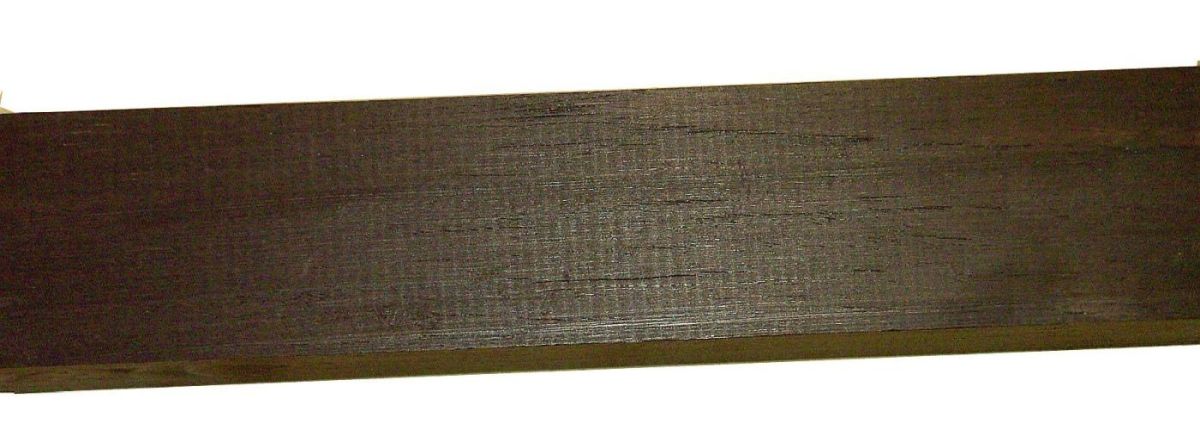
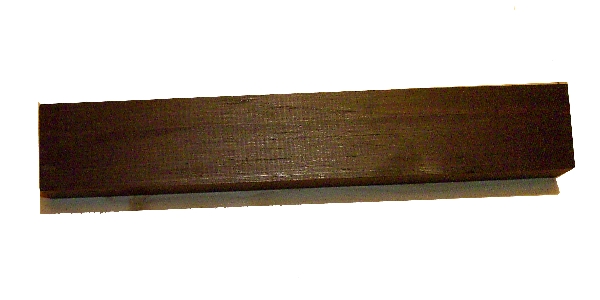 African Blackwood (Dalbergia melanoxylon) is a deep dark brown to almost black hardwood of the rosewood family with a very fine grain (black, sometimes slightly violet). In its native regions, it is known as Mpingo.
It is primarily imported from Mozambique and Tanzania. In the past, it was erroneously traded as Senegal or Mozambique ebony, although it does not belong to the ebony family at all.
It was likely first brought to Europe by Portuguese traders at the beginning of the 16th century. Since then, it has held a permanent place in woodwind instrument making – mainly for clarinets, oboes, flutes, and traditionally the Great Highland Bagpipes.
The wood is famous for its absolutely outstanding acoustic properties. Due to its hardness and density, it produces a particularly overtone-rich and sharp sound.
- Details
-
Also available:

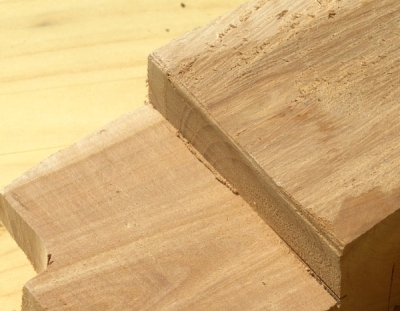
The wood of the apple tree (Pirus Malus) is heavy and hard. In earlier times they have made parts which have a high mechanical stress.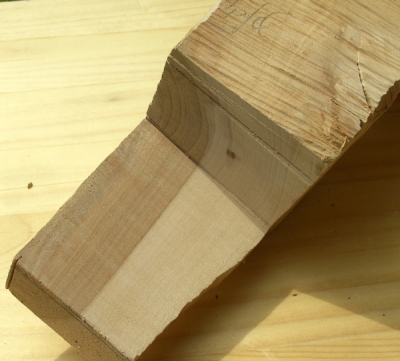
The sometimes very wide sapwood has a whitish-yellow color; heartwood is skin color, light to deep brown. The different colors of heartwood and sapwood can be used to achieve amazing effects with small carvings. Therefore the grain itself is not very noticeable.
The nucleus tends to become dark, almost black zones..
- Details
-
Also available:
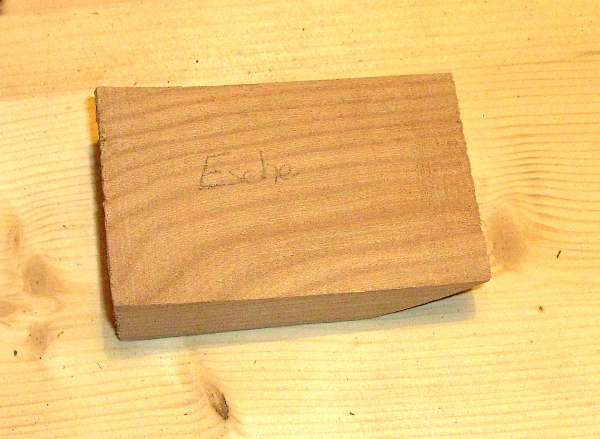
Ash (Fraxinus excelsior / common Ash) is spread all over Europ and is one of the hoghest treas among the decidous trees.
The wood is hard, long fibered and very elastic. In general, it is irregularly striped. It's good workable and has a very high load capacity.
The wood can be found in the furniture industry or boat building, but also for the production of baseball bats and qeues..
American ash is gray-brown with a slight reddish tint.
The common ash has a whitish sapwood which is not always distinguished from the heartwood color (yellowish to reddish white). The grain is straight, the wood structure rather coarse.
Ash wood is ring porous, and the annual ring are clearly visible. The wood dries fairly rapidly with little loss of quality. It is easy to glue and takes stains and polishes good.
- Details
-
Also available:
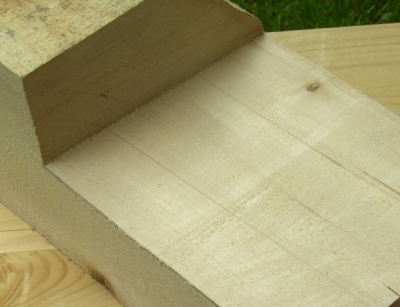
In general, lime wood refers to the timber of the Small-leaved Lime (Tilia cordata) or the Large-leaved Lime (Tilia platyphyllos). It also includes the Common Lime (Tilia x europaea), which is a hybrid of the two.
There are almost no differences between the wood of these lime species, so they are usually treated the same. Lime wood is relatively soft and medium-weight. It is tough, with low elasticity and strength.
It undergoes significant shrinkage during drying; however, once dried, it hardly "works" or cracks. Annual rings are only faintly visible.
Lime has a light heartwood that is barely distinguishable from the sapwood. In terms of color, lime is light-toned—ranging from whitish to yellowish, sometimes with a reddish or brownish tint. Carved surfaces exhibit a beautiful luster.
Lime wood is excellent for processing. it can be carved or turned effortlessly. Furthermore, the surfaces are very easy to treat and polish.
Under sunlight, it tends to yellow, and contact with iron in the presence of moisture leads to gray discolorations.
Lime is arguably one of the most popular woods for carving because it is very easy to work with and carves exceptionally well.
- Details
-
Also available:
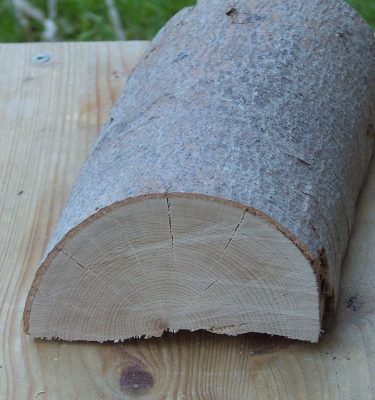
The beech (Fagus sylvatica) is one of the most important native hardwoods and is used in many ways, especially in furniture and interior design.
Beech wood is heavy, hard, very tough and very stable.
It has different colors. It is well recognized by the many small mirrors on the wood surface.
Beech "works" more than other woods and it shrinks pretty strong.
Beeches belong to the heart wood trees. Sapwood and heartwood is reddish brown equally pale yellowish to reddish-white steamed. The wood is fine-pored and has a uniform structure, it is usually not recognizable grain.
O ld trees have under certain circumstances a reddish brown color, which is called "red heart".
The surface can be worked easily edited and polish.
- Details
-
Also available:
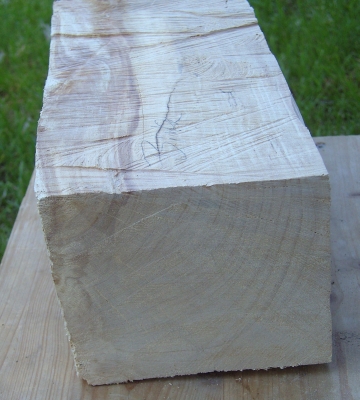
The wood of the birch (betula) is mainly sapwood, the heartwood is more dark, not very often violet. The wood is hard, heavy and elastic.
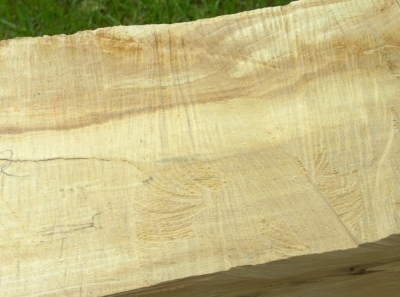 Overall, it is a brightly colored, rather simple wood. The annual rings are separated by narrow strips of latewood. Depending on the fiber orientation very beautiful patterns could emerge.
The wood is easy to carve and to work well. It can also be polished very well and is also very popular with woodturners.
- Details
-
Also available:
Die Douglasie(Pseudotsuga menziesii) wurde etwa 1828 von Amerika nach Europa eingeführt und kann seit ca. 1880 als heimisch angesehen werden.
Sapwood and heartwood are clearly different from the Douglas fir: The sapwood is yellowish to reddish-white, fresh heartwood yellowish brown to reddish yellow, which darkens to a reddish-brown to dark quickly. Especially with dark coloring, there is a certain resemblance to the wood of the larch. The trees grow in the first 50-60 years very quickly, resulting in forming the heartwood initially broader (5-10mm), later thinner growth rings. Depending on location and growing conditions the grain of the wood and its properties change dramatically. Fine growth rings, a few branches and low resin content are generally signs of good qualities. The wood of Douglas fir is moderate and - relative to other conifers - comparatively hard. It shrinks not very much and is distinguished by good dimensional stability. The Douglas fir has good strength and elasticity properties. The wood is exposed to a good resistance to fungi and insects, and even the weather, it is a good natural durability. Due to the possible resin outlet, one has to take care when choosing the wood. Wood with fine rings is soft and can be worked generally better than the one with bigger rings.
- Details
-
Also available:
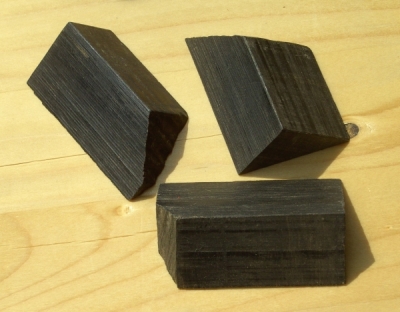
Ebony is not native european wood.
I got some small pieces of ebony as a gift. That's why I decided to write about it here and I tried to find out some facts about this wood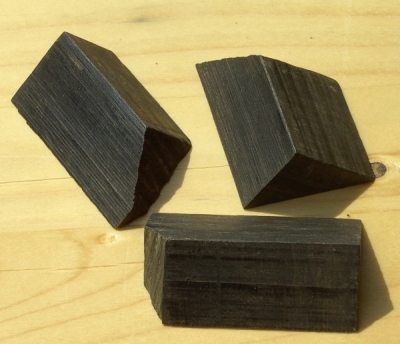
It is one of the most expensive woods. If we hear of ebony we think that this wood should be consistently deep black, in fact there are different types and they may vary in color. There is for example ebony that has a dark green, dark brown to reddish color - it is even available in white
Becuase of its hardness it is really difficultto work with. It also tends to tear out and to splinter. The heartwood has no visible growth rings and it is very hard and heavy. The sap woodis kind of yellow-gray and is rather considered as worthless and therefore rarely traded.
When working with this wood one should should wear a respirator because the dust from sanding may cause irritation of skin, lungs and eyes.
- Details
-
Also available:
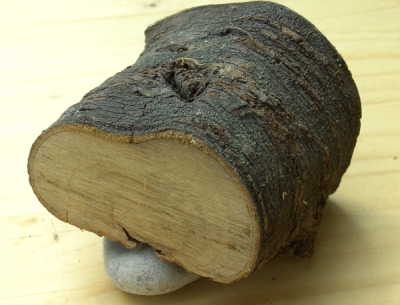
The Japanese Cherry (Prunus serrulata), also known as Oriental Cherry or Hill Cherry, is characterized by a very fine-pored wood with a homogeneous structure. Native to East Asia, it is widely appreciated in Europe as an ornamental tree, primarily for its striking pink blossoms.
The wood features a distinct separation between sapwood and heartwood. The narrow sapwood appears reddish-white-grey, while the heartwood is slightly darker, ranging from reddish-brown to yellowish hues. Occasional greenish streaks may occur. Under light exposure, the wood darkens characteristically, shifting toward orange or deep reddish-brown tones.
- Details
-
Also available: