


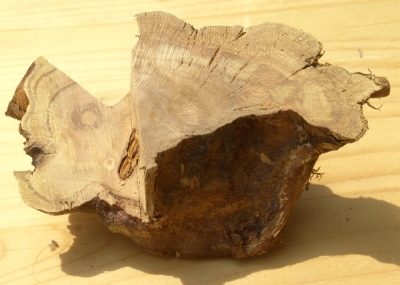
In the timber trade, the term "Rosewood" typically refers to the wood of the Tulip tree (Dalbergia decipularis) or other rosewood species. In contrast, the objects described here are crafted exclusively from the genuine wood of the Rose (genus Rosa), derived from the massive, woody root burls of old rose bushes.
Harvesting this wood is extremely laborious, as only very old plants develop sufficiently dimensioned rootstocks. Compared to tropical hardwoods, the wood of the genuine rose is **relatively soft**, but it captivates with an exceptionally vivid and often flecked grain pattern that rivals the complexity of burl woods.
Drying Challenges: Genuine rose wood is subject to high internal tension. It is highly prone to **radial cracking and warping** during the drying process. This is the primary reason why larger objects made from genuine rose are nearly non-existent. Processing requires great patience and usually necessitates sealing the end-grain surfaces during several years of seasoning.
Applications and Aesthetics: Due to the limited dimensions of the rootstocks, this wood is primarily used in **fine crafts** and for exclusive **miniature objects**. After fine sanding and polishing, the wood reveals a warm, subtly lustrous tone that beautifully highlights the intricate annual ring structures of the root. It is a true niche wood for collectors and enthusiasts of rare native timbers.