


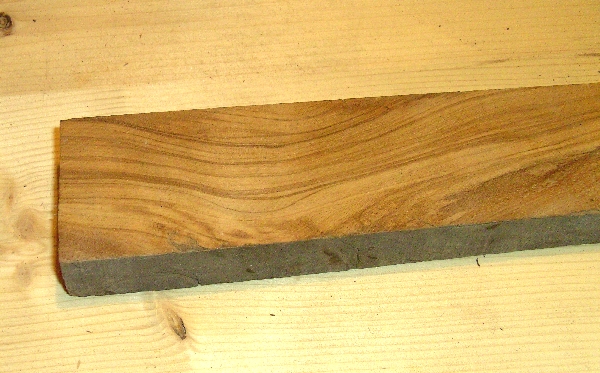
The Olive (Olea europaea) is a characteristic evergreen tree of the Mediterranean region and is among the oldest cultivated plants in human history. Some specimens reach ages of several hundred, and in exceptional cases, over a thousand years.
The tree grows extremely slowly, reaching heights of approximately 10 to 20 meters. Olive wood is exceptionally **dense, hard, and durable**. Especially in old, gnarled trees, the wood exhibits a spectacular grain, often characterized by interlocked grain. The texture is very fine and uniform, with a color spectrum ranging from pale yellow to deep dark brown, often permeated by dark, cloud-like patterns.
Special Characteristics: Olive wood is naturally **very oily**. This means it absorbs very little water and exhibits minimal swelling when in contact with moisture. Furthermore, it possesses natural **antibacterial properties**, which is why it is highly valued worldwide for premium kitchen utensils such as cutting boards and spoons.
Drying and Processing: Drying olive wood is a significant craftsmanship challenge. Due to its high density and oil content, it dries extremely slowly—for massive pieces, drying times of 10 years or more are not uncommon. During the initial phase, the wood is highly prone to cracking, necessitating a very slow and controlled seasoning process.
Applications: In addition to kitchenware, olive wood is primarily used in **fine crafts**, **woodturning** (bowls, knife handles), and exclusive furniture making. It polishes exceptionally well and retains a natural, silky luster due to its inherent oil content.